
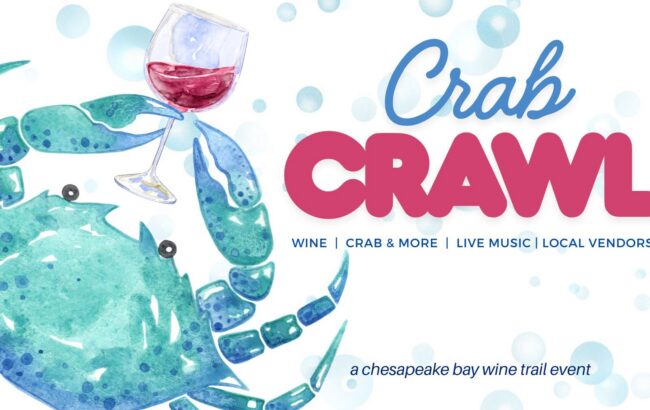
When the Chesapeake Bay Wine Trail hosts its inaugural Crab Crawl on July 25, 2026, it will be celebrating the Bay’s most valuable fishery (source: NOAA), supplying about one-third of all those harvested in the United States: the blue crab, Callinectes Sapidus, meaning “beautiful savory swimmer.”
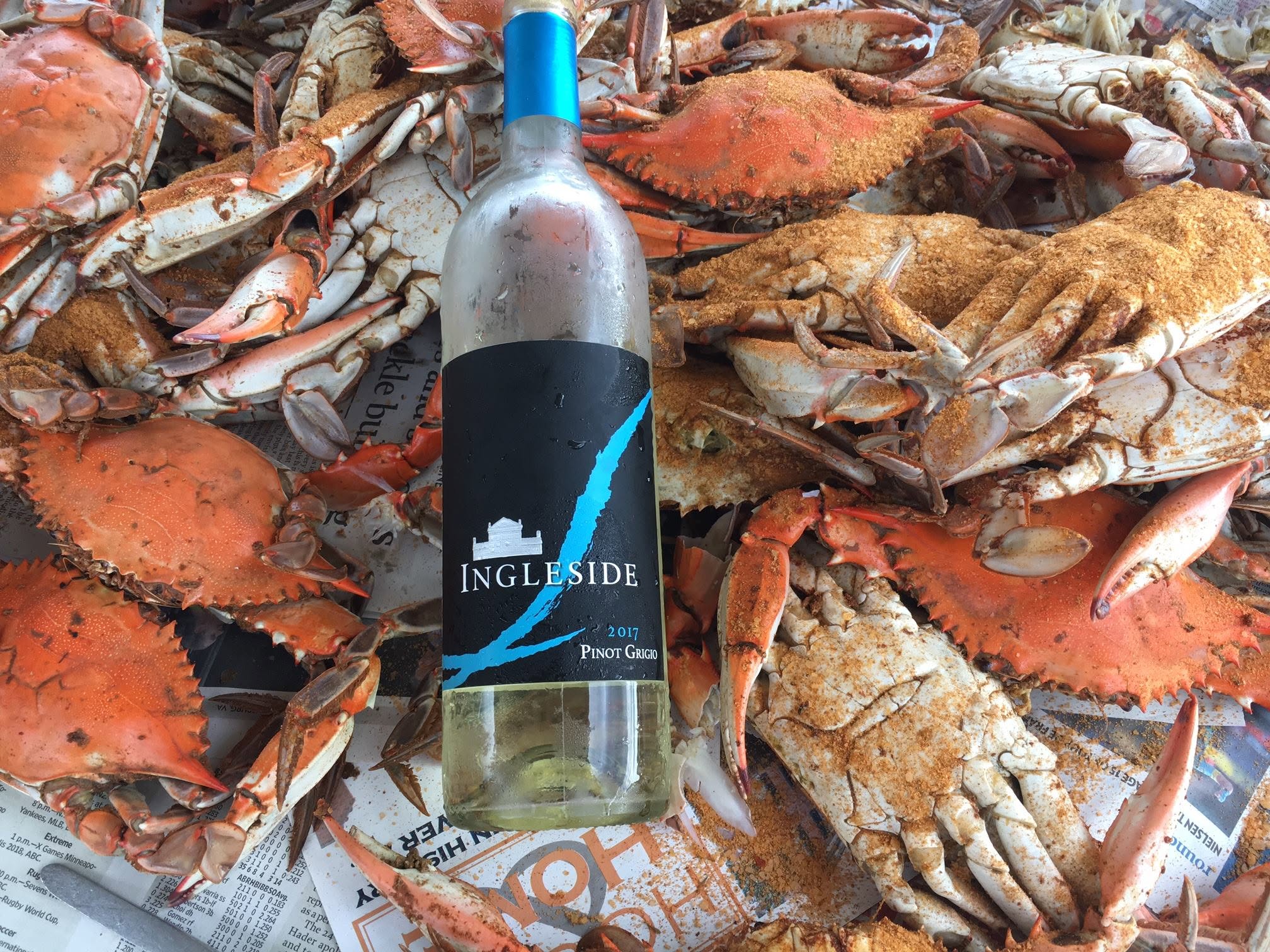
Chesapeake Bay Wine Trail Crab Crawl 2026
The abundance of blue crabs in the region inspires Northern Neck chefs to feature the crustaceans in a variety of mouthwatering meals. During the Chesapeake Bay Wine Trail Crab Crawl, guests can visit any of the Trail’s seven wineries to feast on blue crab dishes, such as Crab Quiche, Crab Salad, Crab Cakes, Crab Dip & Crackers, Crabby Fries, and more. (Check with individual wineries to learn what will be on their menu. Non-seafood items may also be available.) Wineries will offer suggestions as to which of their wines pair perfectly with the crab dishes being offered. In addition to dining, winery guests may be treated to live music, vendors, or other special events.
All seven Trail members are participating in this year’s Crab Crawl. Visit our Crab Crawl event page for additional information and/or contact individual wineries for details:
Ditchley Cider Works (Participating on Sunday, July 26 ONLY due to a private event.)
The Dog and Oyster Micro-Vineyard
Hard Shell vs. Soft Shell
Hard shell crabs and soft shell crabs are the same blue crabs; they are just at different molting stages. All crabs naturally shed their shells as they get bigger—35-40 times over a two-year lifespan. There is a brief window of only 1-3 hours between the time a blue crab sheds its old shell and grows a new one, by absorbing water which hardens its new exoskeleton. This is the reason most harvested blue crabs are hard-shelled. Catching the crabs before their shells harden is labor-intensive, requiring 24-hour monitoring, thus more time and attention from watermen. Consequently, soft shell crabs are considered a delicacy and can command higher prices.
A harvested blue crab typically weighs only about a third of a pound. (The largest ever caught in the Chesapeake Bay weighed 1.1lbs.) The edible portion, however, is even less, especially for hard-shells. Hard shell crabs are more mature, with dense meat inside.
Soft Shell Crabs
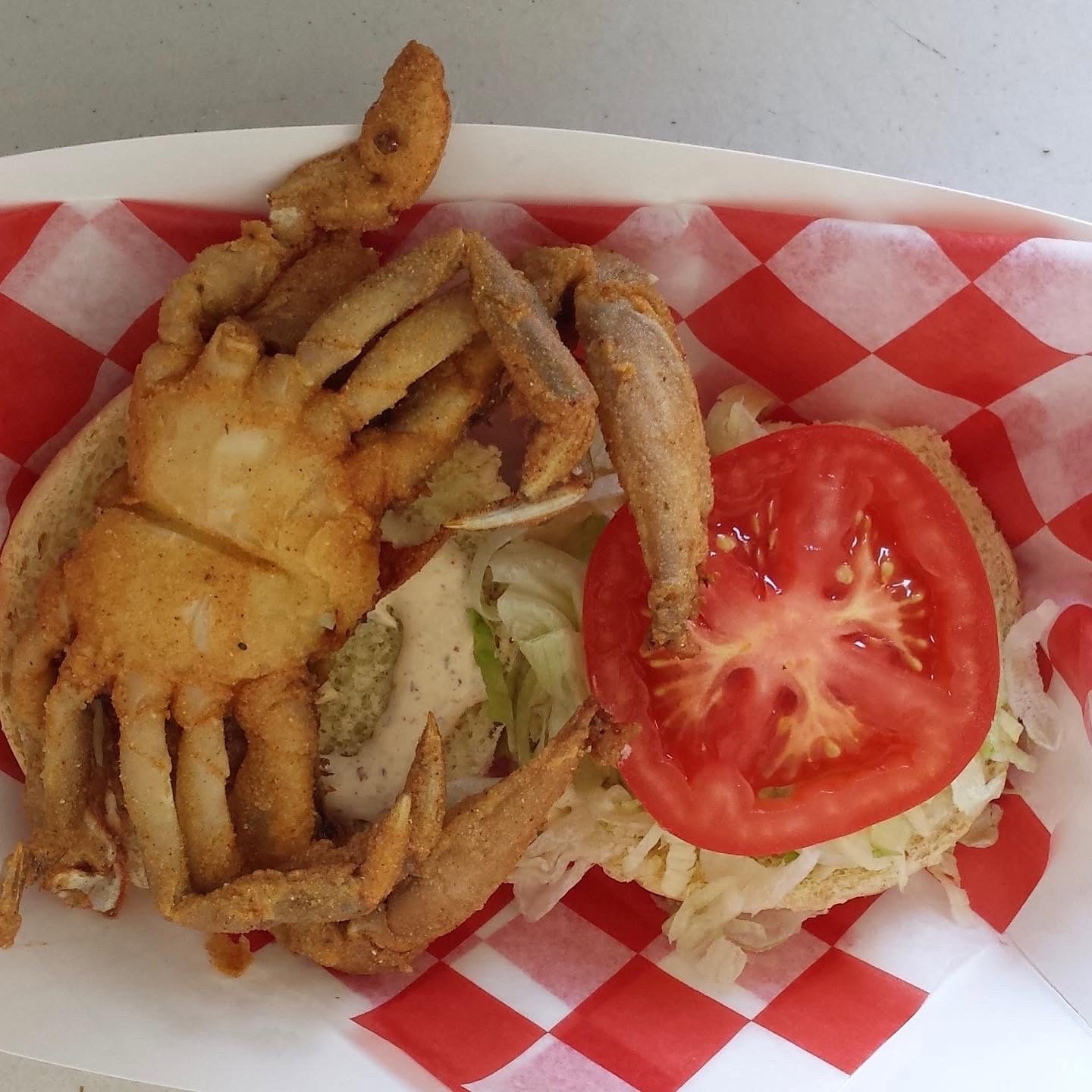
Because soft shell crabs don’t yet have a hardened shell, the entire crab is edible (minus gills, mouth, and apron), but full of water. Typical preparation for soft-shells is battered, fried and eaten whole, often in a sandwich. Some chefs grill or sauté them, serving them with sauces or using them in sushi.
Hard Shell Crabs
Hard shell blue crabs are what seafood lovers think of as traditional. Batches are steamed (or boiled, though that’s heavily debated) whole and sprinkled with spice, such as regional favorite Old Bay. Consumers then crack open the shells with a mallet and pick out the meat from the body.
Both varieties benefit from the Chesapeake Bay’s brackish water and high hepatopancreas (mustard) content, which imparts a rich, salty, sweet flavor. Meat of hard-shell crabs is firm, but tender, robust, and succulent. Soft-shell crabs are delicate, soft, and buttery.
Heart-Healthy Blue Crabs
The Chesapeake Bay and its tributaries are the nation’s largest and most biologically diverse estuary. Virginia is the largest seafood producer on the U.S. Atlantic coast, and third nationwide (behind Alaska and Louisiana.) Reedville, located near several Trail wineries in Virginia’s Northern Neck, is the fourth largest U.S. fishing port based on landings. In terms of economic value, blue crabs rank second, only to oysters. (The Trail also hosts two annual oyster crawls in spring and fall!)
Eating shellfish, like blue crabs, is heart-healthy, providing omega-3 fatty acids, such as DHA and EPA, which is also beneficial for child development. To keep consumers safe, approximately 6,000 watermen and more than 200 seafood companies in Virginia are subject to strict quality control and regulatory standards, recognized among the most stringent in the nation for water quality, according to Virginia Seafood. “Virginia’s water and product are policed by a number of regulatory agencies, including the Food and Drug Administration, the Department of Agriculture and Consumer Services, the Virginia Department of Health, Division of Shellfish Sanitation, and the Virginia Marine Resources Commission. Additionally, Virginia Tech scientists and engineers work with processors to monitor and improve control procedures in shellfish and finfish plants throughout the state.”
No such thing as a Maryland-born crab in the Chesapeake Bay
Blue crabs are also the state of Maryland’s largest and most profitable fishery. But, despite the hype, there’s no such thing as a Maryland-born crab in the Chesapeake Bay. That’s right, we said it!
Former Virginia Gov. Terry McAuliffe made the bold statement in a 2015 radio interview, “If anyone from Maryland is listening, I want to make this perfectly clear: All the crabs are born here in Virginia and they end up, because of the current, being taken [to Maryland]. So really, they should be Virginia crabs.”
The governor wasn’t just trash talking. In the Chesapeake Bay, all blue crabs are Virginia-born. Blue crabs require salinity of 26 parts per 1,000 to survive. Maryland waters simply cannot provide that. So, after mating in Maryland’s side of the Bay, female blue crabs carry sperm packets and their eggs 100-200 miles to the saltier waters of Virginia, where eggs are released and fertilized. Some float up the Bay and mature into adult crabs. Still, even crabs harvested in Maryland’s side of the Bay are native Virginians. Male crabs generally prefer fresh water, found closer to Maryland. (Note: Only Chesapeake Bay blue crabs are 100% Virginia-born. A small number of blue crabs are born along Maryland’s Atlantic Ocean coast.)
History & Future Threats to Chesapeake Bay Blue Crabs
Virginia Seafood points out that local watermen have been fishing the Commonwealth’s waterways “since the first settlers landed in Jamestown.” In some areas, blue crabs were considered a nuisance because they got caught in watermen’s nets. Populations were abundant until the first decline in harvest yields was documented in 1912; and size limits were put in place. Blue crab populations in the Chesapeake Bay and its tributaries vary year to year. Record low numbers of blue crab were observed in 2022, followed by an increase in 2023 and 2024, significant drop in 2025, and rebound in 2026. Virginia and Maryland have teamed up to execute a winter dredge survey to monitor populations and ensure sustainability. This critical partnership between the two states enables the enactment of rules, state laws, federal laws and environmental regulations to help bolster blue crab numbers for current and future generations.
“Regulatory tools include Fishery Management Plans (FMP) to sustain harvests and rebuild stock sizes fallen below scientifically derived target sustainability levels and restrictions on fishing seasons, fish size, days at sea, and gear,” according to the Virginia Seafood website.
Threatening the existence of blue crabs are a variety of factors, including “weather, reproduction, fishing pressure, and predators like invasive blue catfish”, according to Chesapeake Bay Foundation. The Maryland Sea Grant found that “the natural life cycle of crabs, harvest levels, and cycles in climate patterns also affect blue crab reproduction.”
Join us!
Join the Chesapeake Bay Wine Trail for its first, annual Crab Crawl on Saturday, July 25, 2026, from 11 am to 6 pm. (Times vary. Check with individual wineries for their hours of operation.) For more information, visit the Crab Crawl event page on the Trail’s website: https://chesapeakebaywinetrail.com/events/crab-crawl-2026/
